
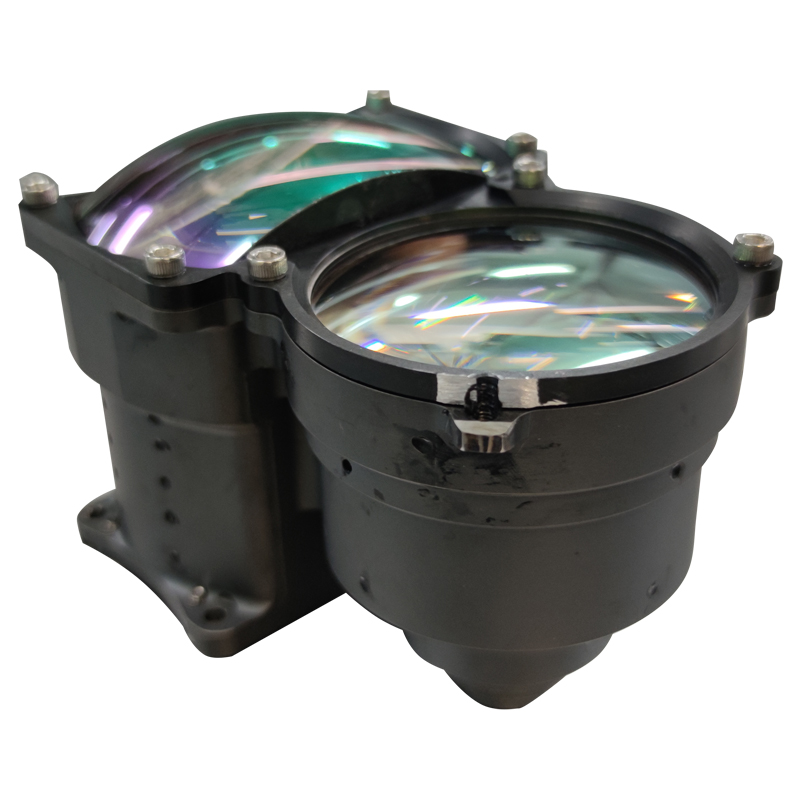
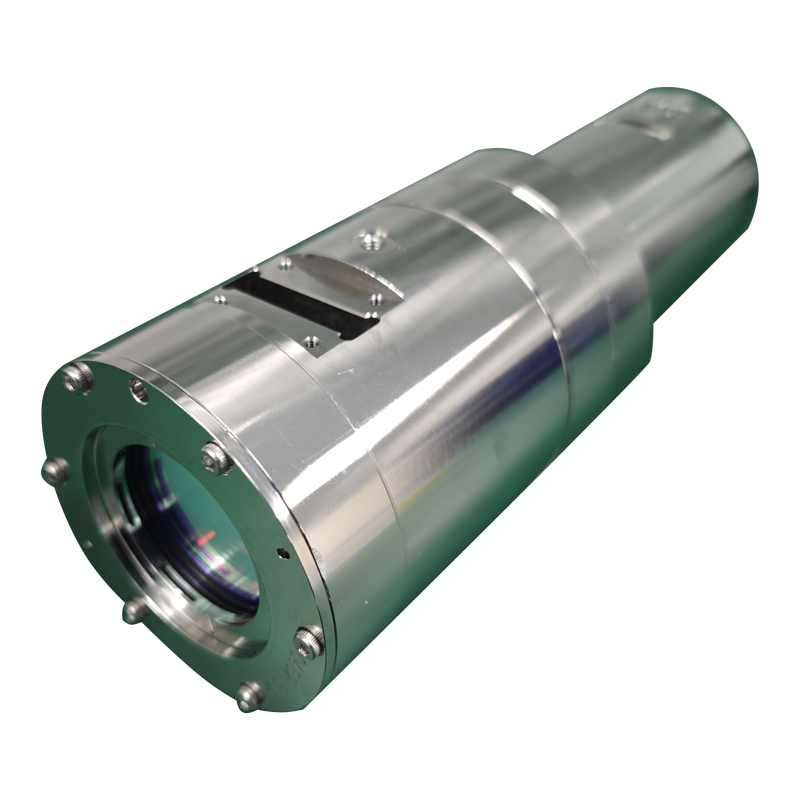
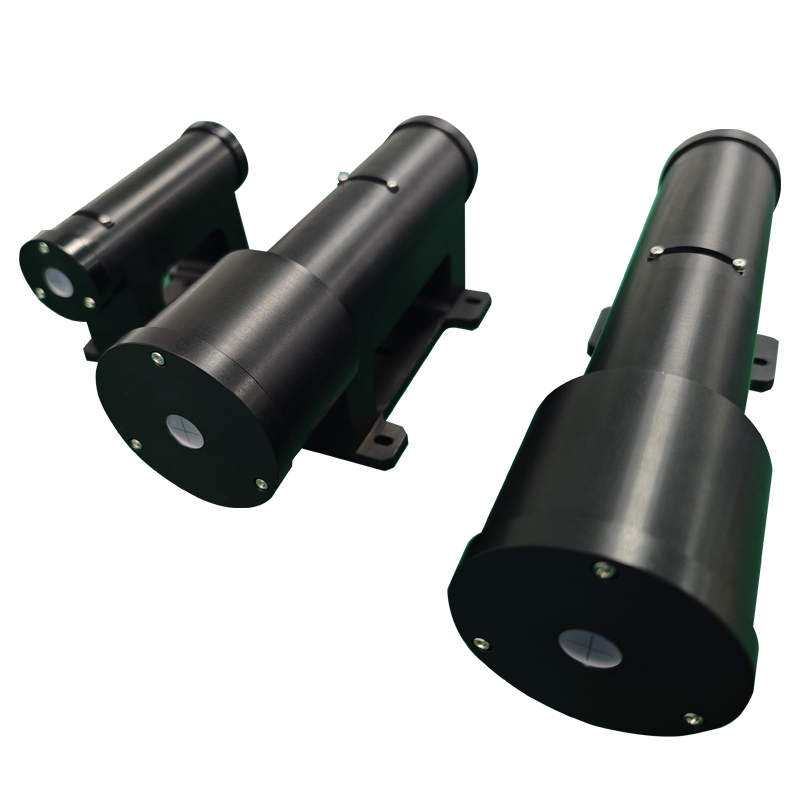
Dust and surface contamination scatter light and can absorb laser energy locally. This can degrade performance or damage a coating. Cleaning also carries a risk of scratches, solvent incompatibility and accidental handling marks, so the first decision is whether cleaning is needed at all.
Inspect before touching the surface
Work in a clean, low-dust area with the optic removed from laser exposure. Examine it near a bright visible-light source and change the viewing angle to reveal scattering and stains. Hold it by its edge or approved mount rather than touching a polished face. Use clean gloves or finger cots compatible with the intended solvent and procedure.
If inspection shows no relevant contamination, leave the surface alone. If only loose particles are present, particle removal may be sufficient. Repeated cleaning of an already clean optic increases handling risk without improving its optical performance.
Remove particles before any wiping
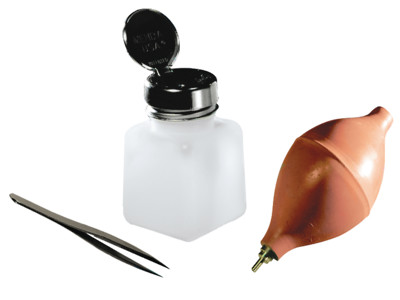
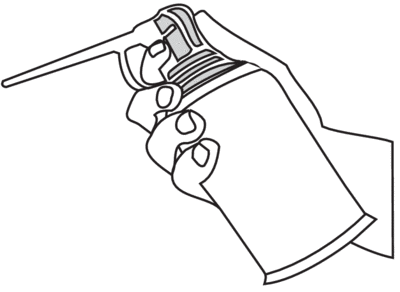
Blow away loose dust with clean, dry, filtered air or nitrogen, using equipment intended for optics. An appropriate clean-air duster can also be used according to its instructions, avoiding liquid propellant or residue. Do not begin by dragging tissue across a dusty face: particles trapped between tissue and coating can scratch the surface.
Inspect again after dust removal. Continue to solvent cleaning only when a compatible method is needed for the remaining contamination.
Match the solvent to the complete optic
Use optical-cleaning tissue with low lint and a suitable high-purity solvent, such as reagent- or spectrophotometric-grade material where the procedure calls for it. Household glass cleaner and ordinary paper or fabric can leave residue or scratch coatings. Use fresh tissue for each pass, and avoid touching the part of the tissue that will meet the optic.
The historical cleaning reference describes a mixture of 60% acetone and 40% methanol: acetone removes some contaminants rapidly, while methanol changes evaporation and dissolving behavior. This is a conditional example for compatible surfaces, not a universal recipe. Isopropyl alcohol is another option for some optics, though its slower evaporation can leave drying marks.
Before using any of these solvents, check compatibility with the coating, substrate, adhesive, edge paint, plastic mount and any cemented interface. The percentages in the historical mixture do not specify a certified formulation or suitability for a particular part. Use the component maker’s cleaning procedure and the solvent’s handling instructions, including solvent-rated gloves and ventilation. A generic glove described only as “acetone resistant” is not enough to establish chemical suitability for every exposure.
Where solvent wiping is appropriate, avoid dry tissue contact. Clean accessible edges first so that a face-cleaning pass does not pull edge contamination onto the optical area. Apply the minimum contact needed and move slowly enough for controlled evaporation without a stationary drying boundary.
Choose a technique for the geometry and coating
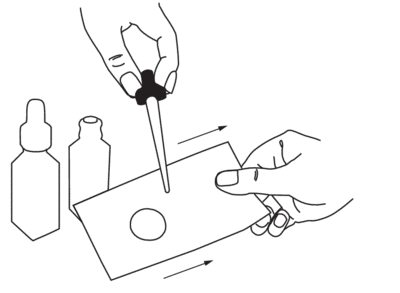
Drop and drag for suitable unmounted optics
- Set the optic on a clean, nonabrasive support without contaminating the working face.
- Remove loose particles.
- Lay a clean lens tissue over the face and add enough compatible solvent to wet the contact area.
- Draw the tissue slowly across in a continuous pass, allowing the wet region to move over the surface without additional finger pressure.
- Discard the tissue and inspect the result before deciding on another pass.
This method is useful for light contamination on compatible unmounted mirrors or beam-pickoff optics. The historical reference used Newport 51xx mirrors and 580x pickoffs as examples; model names do not replace the cleaning instructions for the actual part.
Folded-tissue brush for small optics
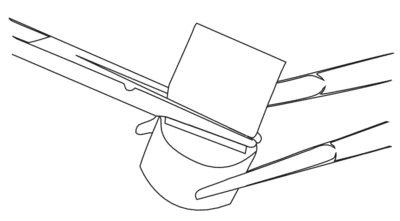
Fold fresh tissue to create a clean edge about as wide as the surface. Grip it close to the fold using clean tweezers or a suitable holder without contaminating that edge. Wet it with a compatible solvent, remove excess liquid and sweep gently from one edge to the other. Use only light contact appropriate to the coating.
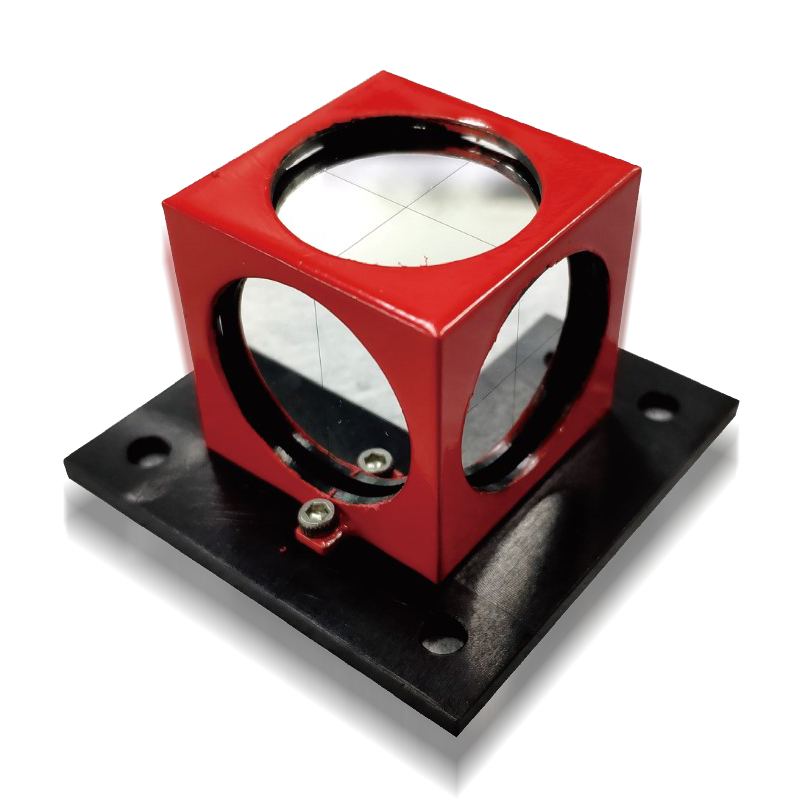
The historical examples included Newport 515x mirrors and 581x beamsplitter cubes. Cemented cubes need particular care: solvent entering the interface between prisms can damage the bond. Do not flood gaps simply because the exposed glass face is solvent-compatible.
Small or mounted optics with restricted edge access
A small tissue-wrapped, low-lint synthetic swab can provide access to a surface that cannot accept a full-width folded brush. Use a clean, soft support and a compatible solvent. A controlled continuous movement around the accessible perimeter and across the center helps avoid drying marks. Do not force a tissue or swab into a retaining-ring gap.
Polarizers, wave plates and aspheric lenses were the source’s examples for this modified technique, including Newport 5511/552x, 554x and 572x-H families. Their inclusion is historical technique context, rather than permission to use the same solvent or pressure on every polarization optic.
Wiping for more durable, compatible coatings
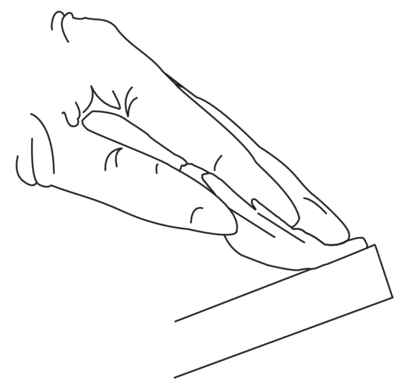
A folded tissue held in the fingers can provide controlled contact for a stubborn stain on a surface whose approved procedure allows it. Keep pressure uniform and move across the face slowly. This is a more intrusive step than dusting or drop-and-drag, so stop if the contamination does not respond without force. The source specifically excludes metallic coatings from this heavier wiping recommendation.
Immersion and ultrasonic cleaning require explicit compatibility
The historical reference describes solvent immersion for surfaces that cannot tolerate wiping, with fresh-solvent rinses and directional drying. It also mentions an ultrasonic bath for heavily contaminated parts. Neither approach is suitable by default: assembled, cemented, porous or delicate components can be damaged by immersion or ultrasonic energy. Use them only when the complete optic’s approved procedure permits the chosen solvent, exposure and bath conditions.
If immersion is approved, remove particles first, use clean solvent and repeat only as required by that procedure. Dry in a controlled direction with appropriate clean gas to reduce residual marks. Avoid improvising ultrasonic settings from a general cleaning article.
Polymer-film cleaning
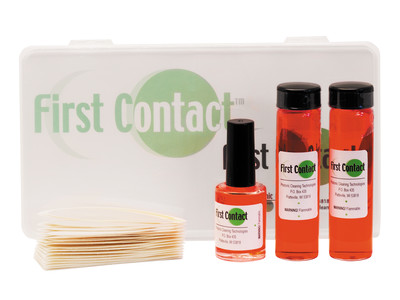
Some commercial cleaning systems apply a compatible polymer solution and remove the dried film. The film can encapsulate particles and lift some organic contamination when peeled away. Such methods can be useful for certain rough surfaces or gratings that are difficult to wipe.
Use a polymer product only on surfaces and structures explicitly covered by its instructions. The historical reference mentions an RFCR red-polymer kit, but claims of atomic cleanliness, zero scratching risk or universally better-than-new surfaces are not a general engineering guarantee. Peeling behavior, residues and compatibility must be assessed for the actual coating and geometry.
Protect the result
After the surface passes inspection, install the optic in its clean operating mount or return it promptly to suitable clean packaging. Avoid leaving it exposed on a bench. Record any unresolved stain or coating change before reuse so that repeated cleaning is not mistaken for a remedy for permanent damage.
The useful sequence is inspection, particle removal, the least intrusive approved method, and inspection again. Escalate the method only when the remaining contamination and the optic’s compatibility justify it.
