
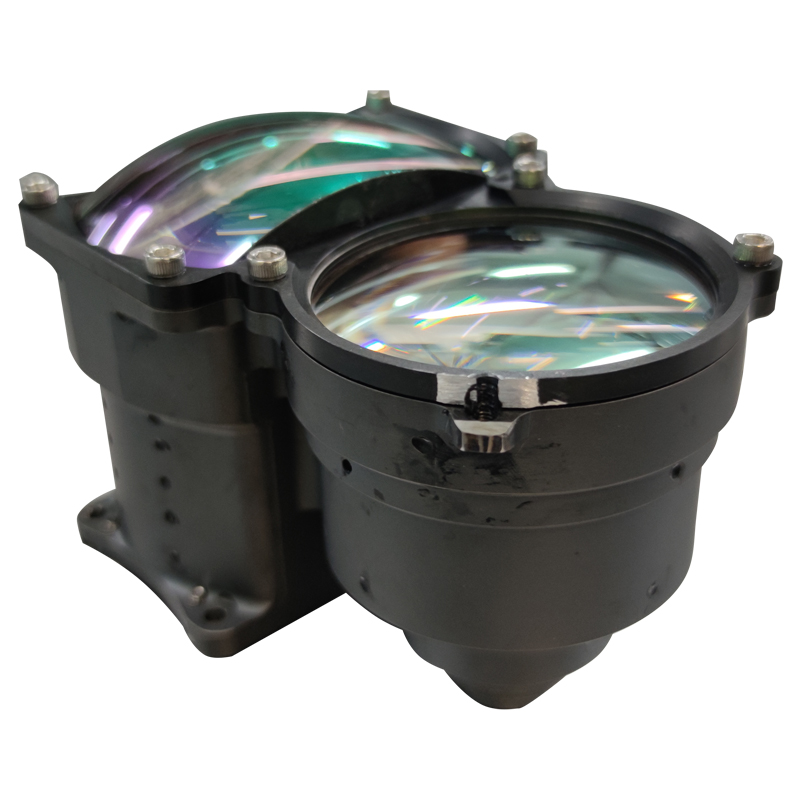
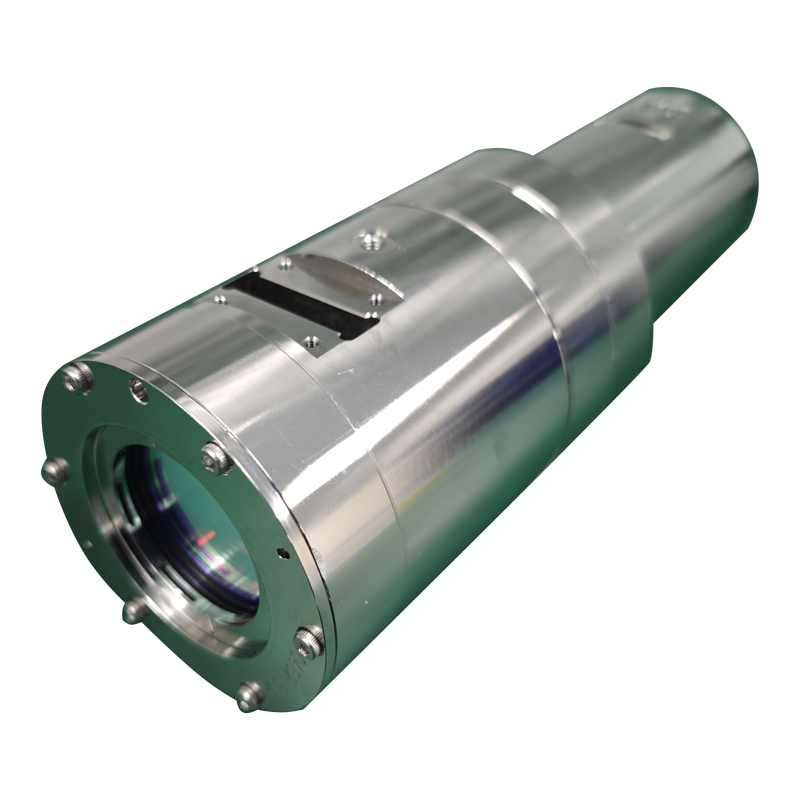
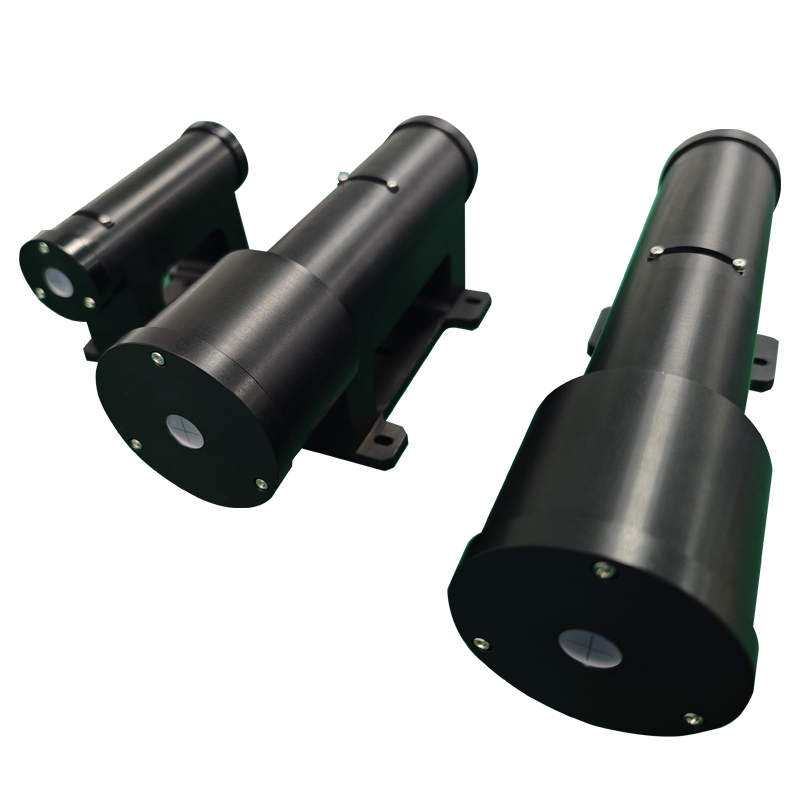
An optical material must meet more than a wavelength requirement. Refractive index and dispersion determine optical behavior; absorption and coatings determine useful transmission; expansion, conductivity and mechanical properties affect mounting and stability. The same substrate can be suitable for a window yet unsuitable for a thermally stable precision mirror.
Compare the operating band first
The ranges below summarize historical nominal material-selection guidance. A range does not promise a fixed transmission at every wavelength: thickness, grade, impurities, surface reflection, coatings and temperature all matter. Use the actual material and coating data for a final design.
| Material | Nominal range in the reference | Relative cost in the reference | Typical reason to consider it |
|---|---|---|---|
| BK 7 | 380–2100 nm | Low | General visible and near-infrared transmissive optics. |
| UV-grade fused silica | 195–2100 nm | Moderate | UV transmission, homogeneity and low thermal expansion. |
| CaF2 | 170–8000 nm | High | Broad UV-to-IR coverage with low refractive index. |
| MgF2 | 150–6500 nm | High | Deep-UV-to-IR applications where crystal orientation can be controlled. |
| ZnSe | 600–16000 nm | High | Infrared lenses, including CO2-laser applications. |
Material-by-material considerations
BK 7: general-purpose crown glass
BK 7 is a borosilicate crown glass commonly chosen for visible and near-infrared components. Good optical homogeneity, low bubble content and straightforward fabrication make it useful for transmissive optics. Its relatively good hardness helps handling, but thermal expansion is much greater than that of fused silica or a low-expansion glass ceramic. Temperature-sensitive mirror applications need a separate stability assessment.
UV-grade fused silica: amorphous silica with low expansion
UV-grade fused silica is high-purity, noncrystalline silicon dioxide. The historical reference gives transmission down to about 195 nm and up to about 2.1 µm, together with high homogeneity and low inclusion content. Its low expansion is valuable where temperature changes matter. Suitable grades are widely used for laser optics, but laser damage resistance still depends on surface quality, contamination, wavelength and pulse conditions; a material name alone is not a damage-threshold specification.
Fused silica and crystalline quartz are different forms of silica. Fused silica avoids the crystal-orientation dependence that must be considered for quartz, while UV transmission depends on the actual silica grade and exposure history.
Calcium fluoride: broad-band, low-index crystal
CaF2 is a cubic single crystal, described in the reference as vacuum-Stockbarger grown. Its broad spectral coverage and low refractive index make it useful for UV and infrared components. The source gives a representative transmission above 90% between 0.25 and 7 µm; that statement lacks a thickness and coating condition and must therefore be treated as historical selection guidance.
UV optical grade and lower-cost infrared material grown from natural fluorite are not automatically equivalent. Thermal expansion is comparatively high, so mounting and operating-temperature changes deserve attention. Low index can make uncoated operation practical in some systems, but reflection losses remain. The reference advises against water-immersion use; select an environmental and cleaning procedure appropriate to the actual crystal.
Magnesium fluoride: broad-band and birefringent
MgF2 is a positive birefringent crystal with a historical nominal range of 0.15–6.5 µm. It is used for UV and infrared windows, lenses and polarization components. The reference describes vacuum-Stockbarger growth and use in excimer-laser environments. Orienting the c axis along the nominal optical axis can reduce birefringent effects for axial propagation, but finite-angle rays and polarization requirements must still be considered.
Its low index can reduce the need for an antireflection coating in some applications, while mechanical durability and thermal behavior must be evaluated by direction. The source discourages water immersion. Broad claims of universal damage resistance or environmental suitability should be replaced by the grade-specific data for the component being designed.
Crystal quartz: useful when birefringence is intentional
Crystalline quartz is a positive uniaxial material, commonly grown hydrothermally. Its ordinary and extraordinary refractive indices differ. That difference is useful for wave plates, but it means that crystal orientation is part of the optical prescription. A transmission application that needs polarization independence should not substitute quartz for fused silica without checking birefringence.
Pyrex and Zerodur: mirror-substrate considerations
Pyrex is a borosilicate glass historically used for nontransmissive substrates where lower expansion is useful and the selected grade’s bulk homogeneity is less critical. Zerodur is a glass ceramic with a near-zero expansion coefficient and good uniformity of that coefficient, making it useful for thermally stable mirror substrates. Its inclusions and bulk optical properties require separate evaluation for transmission; mirror-substrate suitability does not imply suitability for a transmissive lens. These are third-party material trade names.
Zinc selenide: infrared performance and careful handling
ZnSe is commonly made by chemical vapor deposition and is used in thermal imaging, medical optical systems and high-power CO2-laser optics. Its broad infrared coverage and low absorption in suitable grades are valuable. Its relatively high refractive index makes surface-reflection losses important, so an appropriate antireflection coating is often needed. ZnSe is comparatively soft and scratch-sensitive; mounting, cleaning and handling must account for that limitation.
Read the thermal and mechanical properties together
Expansion governs dimensional change, conductivity affects how heat spreads, and heat capacity contributes to temperature response. Young’s modulus and hardness describe different mechanical properties; neither is a direct laser-damage rating. Crystal data can be directional. In the table, ∥ means parallel to the c axis and ⊥ means perpendicular.
| Material | Abbe number vd | Thermal expansion (10⁻⁶/°C) | Thermal conductivity (W/m·°C) | Heat capacity (J/g·°C) | Density at 25°C (g/cm³) | Knoop hardness (kg/mm²) | Young’s modulus (GPa) |
|---|---|---|---|---|---|---|---|
| BK 7 | 64.17 | 7.1 | 1.114 | 0.858 | 2.51 | 610 | 81.5 |
| SF 2 | 33.85 | 8.4 | 0.735 | 0.498 | 3.86 | 410 | 55 |
| UV Fused Silica | 67.8 | 0.52 | 1.38 | 0.75 | 2.202 | 600 | 73 |
| CaF2 | 94.96 | 18.85 | 9.71 | 0.85 | 3.18 | 158 | 75.8 |
| MgF2 | 106.18 | 13.7 || to c axis 8.48 ⊥ to c axis | 21 || to c axis 30 to ⊥ c axis | 1.024 | 3.177 | 415 | 138.5 |
| Crystal Quartz | 69.87 | 7.1 to || c axis 13.2 ⊥ to c axis | 10.4 || to c axis 6.2 ⊥ to c axis | 0.74 | 2.649 | 740 | 97 || to c axis 76.5 ⊥ to c axis |
| Pyrex® | 66 | 3.25 | 1.13 | 0.75 | 2.23 | 418 | 65.5 |
| Zerodur® | 56.09 | 0 ± 0.1 | 1.46 | 0.80 | 2.53 | 620 | 90.3 |
| ZnSe | 84.45 | 7.6 | 18.0 | 0.399 | 5.27 | 105 | 70 |
These are the nominal figures carried by the historical reference. The listed Zerodur expansion of 0 ± 0.1 × 10⁻⁶/°C is an example value, not a guarantee for every expansion class, lot or temperature interval. The table does not specify all test conditions. Confirm actual supplier data before using any value as a design limit.
Dispersion and refractive-index data
The Abbe number describes visible dispersion, while a detailed optical calculation requires refractive index at the relevant wavelength. Birefringent crystals need separate ordinary and extraordinary values. The complete historical wavelength table is provided below so that UV, visible and infrared examples remain available.
Tabulated index values do not establish that a material transmits adequately at that wavelength. In particular, a mathematical or historical index entry outside the nominal transmission band should not be read as a recommendation to use that material there. The SF 2 value of 1.52127 at 193 nm in the historical table is inconsistent with the neighboring UV entries and needs independent verification; it is retained as printed rather than silently replaced. The table also labels 628 nm as a ruby-laser line, while separately listing the familiar 694.3 nm ruby entry; retain the wavelength as the lookup key and verify the source designation.
Open the complete 63-row refractive-index table
| Wavelength (nm) | Source label | BK 7 | SF 2 | UV fused silica | CaF₂ | MgF₂ nₒ | MgF₂ nₑ | Crystal quartz nₒ | Crystal quartz nₑ |
|---|---|---|---|---|---|---|---|---|---|
| 193 | ArF excimer laser | 1.65528 | 1.52127 | 1.56077 | 1.50153 | 1.42767 | 1.44127 | 1.66091 | 1.67455 |
| 244 | Ar-Ion laser | 1.58265 | 1.98102 | 1.51086 | 1.46957 | 1.40447 | 1.41735 | 1.60439 | 1.61562 |
| 248 | KrF excimer | 1.57957 | 1.93639 | 1.50855 | 1.46803 | 1.40334 | 1.41618 | 1.60175 | 1.61289 |
| 257 | Ar-Ion laser | 1.57336 | 1.86967 | 1.50383 | 1.46488 | 1.40102 | 1.41377 | 1.59637 | 1.60731 |
| 266 | Nd:YAG laser | 1.56796 | 1.82737 | 1.49968 | 1.46209 | 1.39896 | 1.41164 | 1.59164 | 1.60242 |
| 308 | XeCl excimer laser | 1.55006 | 1.73604 | 1.48564 | 1.45255 | 1.39188 | 1.40429 | 1.57556 | 1.58577 |
| 325 | HeCd laser | 1.54505 | 1.71771 | 1.48164 | 1.44981 | 1.38983 | 1.40216 | 1.57097 | 1.58102 |
| 337.1 | N2 laser | 1.54202 | 1.70749 | 1.47919 | 1.44813 | 1.38858 | 1.40085 | 1.56817 | 1.57812 |
| 351 | XeF excimer laser | 1.53896 | 1.69778 | 1.47672 | 1.44642 | 1.38730 | 1.39952 | 1.56533 | 1.57518 |
| 351.1 | Ar-Ion laser | 1.53894 | 1.69771 | 1.47671 | 1.44641 | 1.38729 | 1.39951 | 1.56531 | 1.57516 |
| 354.7 | Nd:YAG laser | 1.53821 | 1.69548 | 1.47612 | 1.44601 | 1.38699 | 1.39920 | 1.56463 | 1.57446 |
| 363.8 | Ar-Ion laser | 1.53649 | 1.69029 | 1.47472 | 1.44504 | 1.38626 | 1.39844 | 1.56302 | 1.57279 |
| 404.7 | Mercury arc, h line | 1.53023 | 1.67263 | 1.46961 | 1.44151 | 1.38360 | 1.39567 | 1.55714 | 1.56670 |
| 416 | Kr-Ion laser | 1.52885 | 1.66893 | 1.46847 | 1.44072 | 1.38301 | 1.39505 | 1.55583 | 1.56535 |
| 435.8 | Mercury arc,g line | 1.52669 | 1.66331 | 1.46670 | 1.43949 | 1.38207 | 1.39408 | 1.55379 | 1.56323 |
| 441.6 | HeCd laser | 1.52611 | 1.66184 | 1.46622 | 1.43916 | 1.38183 | 1.39382 | 1.55324 | 1.56266 |
| 457.9 | Ar-Ion laser | 1.52461 | 1.65807 | 1.46498 | 1.43830 | 1.38118 | 1.39314 | 1.55181 | 1.56119 |
| 465.8 | Ar-Ion laser | 1.52395 | 1.65641 | 1.46443 | 1.43792 | 1.38088 | 1.39284 | 1.55118 | 1.56053 |
| 472.7 | Ar-Ion laser | 1.52339 | 1.65505 | 1.46397 | 1.43760 | 1.38064 | 1.39258 | 1.55065 | 1.55998 |
| 476.5 | Ar-Ion laser | 1.52309 | 1.65432 | 1.46372 | 1.43744 | 1.38051 | 1.39245 | 1.55036 | 1.55969 |
| 480 | Cadmium arc, F’ line | 1.52283 | 1.65367 | 1.46350 | 1.43728 | 1.38040 | 1.39233 | 1.55011 | 1.55943 |
| 486.1 | Hydrogen arc, F line | 1.52238 | 1.65258 | 1.46313 | 1.43703 | 1.38020 | 1.39212 | 1.54968 | 1.55898 |
| 488 | Ar-Ion laser | 1.52224 | 1.65225 | 1.46301 | 1.43695 | 1.38014 | 1.39206 | 1.54955 | 1.55885 |
| 496.5 | Ar-Ion laser | 1.52165 | 1.65083 | 1.46252 | 1.43661 | 1.37988 | 1.39179 | 1.54898 | 1.55826 |
| 501.7 | Ar-Ion laser | 1.52130 | 1.65000 | 1.46223 | 1.43641 | 1.37973 | 1.39163 | 1.54865 | 1.55792 |
| 510.6 | Cu vapor laser | 1.52073 | 1.64865 | 1.46176 | 1.43609 | 1.37948 | 1.39137 | 1.54810 | 1.55735 |
| 514.5 | Ar-Ion laser | 1.52049 | 1.64808 | 1.46156 | 1.43595 | 1.37937 | 1.39126 | 1.54787 | 1.55711 |
| 532 | Nd:YAG laser | 1.51947 | 1.64570 | 1.46071 | 1.43537 | 1.37892 | 1.39079 | 1.54689 | 1.55610 |
| 543.5 | HeNe laser | 1.51886 | 1.64427 | 1.46019 | 1.43502 | 1.37865 | 1.39051 | 1.54630 | 1.55549 |
| 546.1 | Mercury arc, e line | 1.51872 | 1.64397 | 1.46008 | 1.43494 | 1.37859 | 1.39044 | 1.54617 | 1.55535 |
| 578.2 | Cu vaport laser | 1.51720 | 1.64053 | 1.45880 | 1.43408 | 1.37792 | 1.38974 | 1.54470 | 1.55383 |
| 587.6 | Helium arc, d line | 1.51680 | 1.63963 | 1.45846 | 1.43385 | 1.37774 | 1.38956 | 1.54431 | 1.55343 |
| 589.3 | Sodium arc, D line | 1.51673 | 1.63947 | 1.45840 | 1.43381 | 1.37771 | 1.38952 | 1.54424 | 1.55336 |
| 594.1 | HeNe laser | 1.51653 | 1.63904 | 1.45824 | 1.43370 | 1.37762 | 1.38943 | 1.54405 | 1.55316 |
| 611.9 | HeNe laser | 1.51584 | 1.63752 | 1.45765 | 1.43331 | 1.37732 | 1.38911 | 1.54337 | 1.55247 |
| 628 | Ruby laser | 1.51526 | 1.63626 | 1.45716 | 1.43298 | 1.37706 | 1.38884 | 1.54281 | 1.55188 |
| 632.8 | HeNe laser | 1.51509 | 1.63590 | 1.45702 | 1.43289 | 1.37698 | 1.38876 | 1.54264 | 1.55171 |
| 635 | Laser diode | 1.51501 | 1.63574 | 1.45695 | 1.43284 | 1.37695 | 1.38873 | 1.54257 | 1.55164 |
| 643.8 | Cadmium arc, C' line | 1.51472 | 1.63512 | 1.45671 | 1.43268 | 1.37682 | 1.38859 | 1.54228 | 1.55134 |
| 647.1 | Kr-Ion laser | 1.51461 | 1.63489 | 1.45661 | 1.43262 | 1.37677 | 1.38854 | 1.54218 | 1.55123 |
| 650 | Laser diode | 1.51452 | 1.63469 | 1.45653 | 1.43257 | 1.37673 | 1.38850 | 1.54209 | 1.55114 |
| 656.3 | Hydrogen arc, C line | 1.51432 | 1.63427 | 1.45637 | 1.43246 | 1.37664 | 1.38840 | 1.54189 | 1.55093 |
| 670 | Laser diode | 1.51391 | 1.63340 | 1.45601 | 1.43223 | 1.37646 | 1.38821 | 1.54148 | 1.55051 |
| 676.4 | Kr-Ion laser | 1.51372 | 1.63301 | 1.45585 | 1.43212 | 1.37637 | 1.38812 | 1.54130 | 1.55032 |
| 694.3 | Ruby laser | 1.51322 | 1.63198 | 1.45542 | 1.43185 | 1.37615 | 1.38789 | 1.54080 | 1.54981 |
| 750 | Laser diode | 1.51184 | 1.62922 | 1.45424 | 1.43109 | 1.37553 | 1.38724 | 1.53943 | 1.54839 |
| 780 | Laser diode | 1.51118 | 1.62796 | 1.45367 | 1.43074 | 1.37524 | 1.38693 | 1.53878 | 1.54771 |
| 830 | Laser diode | 1.51020 | 1.62613 | 1.45282 | 1.43023 | 1.37480 | 1.38647 | 1.53779 | 1.54668 |
| 850 | Laser diode | 1.50984 | 1.62548 | 1.45250 | 1.43004 | 1.37464 | 1.38630 | 1.53742 | 1.54630 |
| 852.1 | Cesium arc, s line | 1.50980 | 1.62541 | 1.45247 | 1.43002 | 1.37462 | 1.38628 | 1.53739 | 1.54626 |
| 905 | Laser diode | 1.50892 | 1.62387 | 1.45168 | 1.42957 | 1.37422 | 1.38586 | 1.53648 | 1.54532 |
| 980 | Laser diode | 1.50779 | 1.62202 | 1.45067 | 1.42902 | 1.37371 | 1.38533 | 1.53531 | 1.54409 |
| 1014 | Mercury arc, t line | 1.50731 | 1.62128 | 1.45024 | 1.42879 | 1.37350 | 1.38510 | 1.53481 | 1.54357 |
| 1053 | Nd:YLF laser | 1.50678 | 1.62049 | 1.44976 | 1.42854 | 1.37326 | 1.38485 | 1.53425 | 1.54299 |
| 1060 | Nd:Glass laser | 1.50669 | 1.62035 | 1.44968 | 1.42850 | 1.37322 | 1.38480 | 1.53415 | 1.54288 |
| 1064 | Nd:YAG laser | 1.50663 | 1.62028 | 1.44963 | 1.42848 | 1.37319 | 1.38478 | 1.53410 | 1.54282 |
| 1300 | Laser diode | 1.50370 | 1.61644 | 1.44692 | 1.42721 | 1.37188 | 1.38338 | 1.53094 | 1.53950 |
| 1320 | Nd:YAG laser | 1.50346 | 1.61616 | 1.44669 | 1.42711 | 1.37177 | 1.38327 | 1.53068 | 1.53922 |
| 1550 | Laser diode | 1.50065 | 1.61312 | 1.44402 | 1.42602 | 1.37052 | 1.38194 | 1.52761 | 1.53596 |
| 1970.1 | Mercury arc | 1.49495 | 1.60780 | 1.43852 | 1.42401 | 1.36803 | 1.37928 | 1.52138 | 1.52932 |
| 2100 | Ho:YAG laser | 1.49296 | 1.60608 | 1.43659 | 1.42334 | 1.36718 | 1.37837 | 1.51924 | 1.52703 |
| 2325.4 | Mercury arc | 1.48921 | 1.60291 | 1.43293 | 1.42212 | 1.36559 | 1.37667 | 1.51524 | 1.52277 |
| 2940 | Er:YAG laser | 1.47670 | 1.59273 | 1.42065 | 1.41827 | 1.36051 | 1.37123 | 1.50246 | 1.50908 |
Transmission and reflection are different losses
External transmittance includes both bulk absorption and the reflection losses at uncoated surfaces. Internal material transmission does not include those same surface losses. A quoted transmission curve is meaningful only with its thickness and surface condition. The source’s visible/near-infrared window comparison used 10 mm thickness; values from that geometry should not be transferred unchanged to thinner or thicker components.
Metal mirrors also require wavelength and environment assessment. Aluminum, protected aluminum, gold, silver and rhodium coatings have different spectral behavior. Overcoats such as MgF2, SiO or dielectric protection modify performance and durability. Exposure to pollution or intense ultraviolet radiation can degrade a mirror, while overheating can damage the reflective layer.
The historical reference discusses enhanced rhodium for UV ellipsoidal reflectors and Al/MgF2 for near-UV use. Those are coating-design examples rather than universal rankings. Coating thickness, angle of incidence, polarization and operating environment are needed for a meaningful comparison.
A practical selection sequence
- Define the operating wavelengths, bandwidth and required polarization behavior.
- Choose candidate material grades using transmission and absorption data at the component thickness.
- Check dispersion, homogeneity and, for crystals, optical-axis orientation.
- Evaluate thermal loading, expansion, mounting stress and mechanical handling.
- Select coatings and verify the finished component’s transmission, reflection and laser operating limits under the intended conditions.
